

Is Cosmetic Surgery in Thailand Safe? An Honest Answer From a Bangkok Surgeon
By Dr. Rushapol Sdawat, MD — Thai Board-certified Plastic and Reconstructive Surgeon, Medical Licence No. 17689 Last reviewed:
In August 2026, Australian television broadcast the stories of women who came to Bangkok for cosmetic surgery and went home disfigured. I am a plastic surgeon in Bangkok. I watched it, and I am not going to tell you those stories were unrepresentative or unfair.
The honest answer to the question in the title is: it depends entirely on who operates on you, where, and what happens afterwards — and the gap between the best and the worst in this city is wider than in almost any other medical market in the world. That is an uncomfortable thing for someone in my position to write, and it is also the only useful thing I can tell you.
What follows is an attempt to give you the tools to tell the difference, including the parts that do not flatter my own industry.

What the criticism gets right
Two days after the broadcast, the Australasian Society of Aesthetic Plastic Surgeons issued a statement calling for government action. The line that should concern you most is this one:
"heavily curated patient stories, before-and-after content and positive recovery experiences can create an impression of safety that may not show complications, recovery difficulties or longer-term outcomes."
They are describing the standard marketing model of this entire category, and they are correct. If you have spent an evening reading Thailand surgery websites, you have seen hundreds of glowing testimonials and close to zero discussion of what happens when things go wrong. That asymmetry is not evidence that complications are rare. It is evidence that nobody publishes them.
The Australian Society of Plastic Surgeons is blunter still: cosmetic tourism is "a price-driven practice," surgical qualifications and facility standards overseas "may not consistently meet the high standards required in Australia," and — the criticism that lands hardest — "patients who have had surgery overseas often report only meeting their surgeon on the day of their operation."
I have met patients for whom that was true elsewhere. It is indefensible. You cannot consent properly to an operation you discussed for the first time an hour beforehand, through a coordinator, with a surgeon whose name you learned that morning.
ASAPS also estimates that around 15,000 Australians travel overseas for cosmetic surgery each year — adding that they "believe the true number may be considerably higher" — spending roughly $300 million, and that revision surgery may be needed in up to seven per cent of cases. Dr Mark Duncan-Smith, a Perth plastic surgeon, has publicly estimated that Australian plastic surgeons collectively treat two to three thousand patients a year for complications from overseas procedures.
Take those numbers seriously. I would add one caveat in the interests of accuracy rather than defence: as a professor quoted in an Australian health-fund article on this topic noted, medical tourism data should be "taken with a heavy grain of salt" because it is "rarely collected by impartial third parties." The bodies producing complication estimates also compete commercially with overseas providers. That does not make the numbers wrong. It means nobody — including me — is a neutral source here, and you should weight everything you read accordingly, including this.
What the criticism gets wrong
The weakest part of the case against Thai surgery is the implication that the country lacks surgical standards. It does not.
Thailand has a formal specialist certification system administered by the Royal College of Surgeons of Thailand under the Medical Council of Thailand. Thai Board certification in Plastic and Reconstructive Surgery requires a completed medical degree followed by either a general surgery residency plus a further plastic surgery residency, or a direct-entry plastic surgery residency, at an accredited teaching hospital, with examination at each stage. My own path was the first of those: Siriraj Hospital for medicine, Phramongkutklao Hospital for the general surgery board, and Ramathibodi Hospital at Mahidol University for the plastic surgery board.
Every registered doctor in Thailand carries a Medical Council licence number. Mine is 17689. It is publicly verifiable — the Medical Council of Thailand runs a free English-language register at checkmd.tmc.or.th — and so is every other Thai doctor's. Go and check mine now.
The problem in Bangkok is not the absence of a standard. It is that the standard is not what most patients are actually buying. A great deal of cosmetic work in this city is performed by doctors who are not plastic surgeons at all — general practitioners, dermatologists, doctors with a weekend course certificate — in clinics rather than hospitals. Nothing about the phrase "Thailand" tells you which of those two worlds you have walked into. The word that matters is not the country. It is the credential.
The seven questions that actually separate safe from unsafe
If you do nothing else, ask these. Ask them of me, and ask them of everyone else you are considering — including surgeons in Australia and New Zealand.
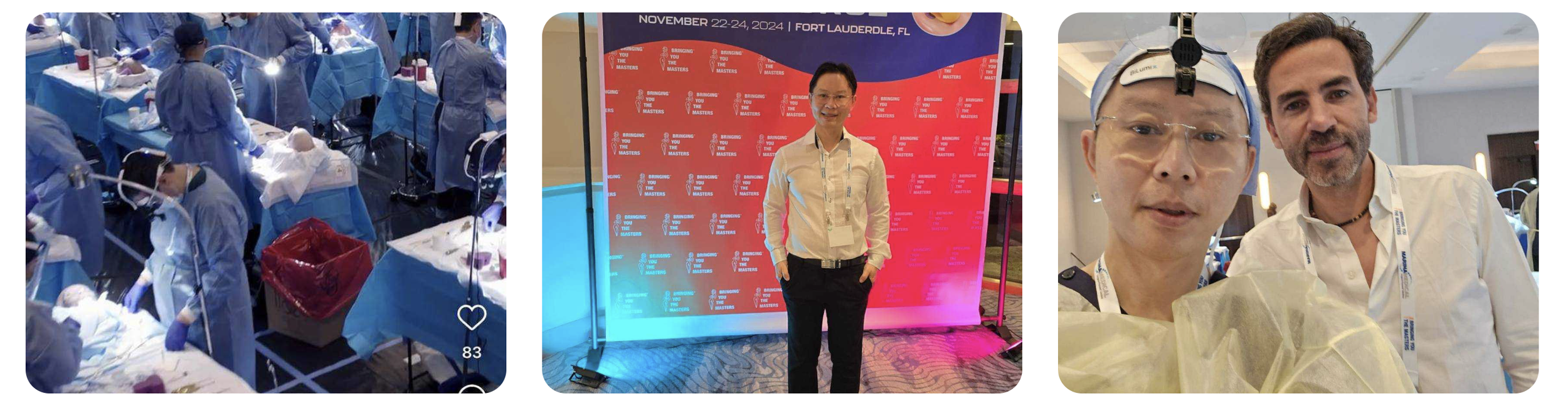
1. What is your surgeon's name and licence number, and can I verify it myself?If a provider will not name the operating surgeon before you pay a deposit, stop. A named surgeon with a verifiable Medical Council number is the floor, not a feature. Be alert to the surgeon being changed after booking.
2. Is the surgeon certified by the Thai Board of Plastic and Reconstructive Surgery?Not "board certified" unqualified — the specific board. Membership of international societies is not certification. ISAPS and ASPS are membership organisations; they do not certify or accredit anyone, and any provider describing a surgeon as "ISAPS-certified" either misunderstands this or is hoping you do.
3. Will I speak to the operating surgeon before I fly, on video, for long enough to disagree with him?This is the single strongest predictor of a good experience, and it is where ASAPS's criticism has the most force. The consultation should be with the surgeon, not a coordinator, and long enough that you could be told no.
4. In what facility will the operation take place, and what is its accreditation?A licensed hospital with an intensive care unit, a resident anaesthetist and blood banking is a materially different risk environment from a day clinic. Ask what the accreditation actually is and check that the accrediting body exists and accredits hospitals. Intrarat Hospital, where I operate, is certified to ISO 9001:2015. It is not JCI-accredited, and you should be sceptical of any provider implying otherwise — several sites quote Thailand-wide JCI statistics in a way that reads as a claim about their own hospital.
5. Who administers the anaesthetic and what monitoring is in place?The answer should be a qualified anaesthetist, in a hospital, with full monitoring and post-operative recovery capability. Anaesthesia is where the worst outcomes in cosmetic surgery originate.
6. What is the written policy on complications and revisions — who pays, and for what?Get it in writing before you pay. Include: who reviews you after you fly home, how you contact the operating surgeon directly, what a revision costs, and who pays for return flights and accommodation if one is needed. Vagueness here is the reddest flag in this industry.
7. What are you not telling me — what are the risks, and when would you refuse to operate?A surgeon who cannot readily describe the complications of your procedure, or who has never declined a case, is telling you something important. I decline operations regularly: patients whose expectations cannot be met by surgery, patients too young for what they are asking, patients whose risk profile makes the procedure unwise, and patients whose problem is not surgical. If that answer never comes, ask harder.
The things that go wrong
Because nobody in my industry writes this section, here it is.
Haematoma — bleeding into the surgical space, typically within the first 24 to 48 hours. The most common early complication in facelift surgery. Usually requires a return to theatre. This is the primary clinical reason to remain near your surgeon in the first week.
Seroma — a fluid collection, most common after abdominoplasty and extensive liposuction. Often managed with drainage in clinic, sometimes repeatedly.
Infection — surgical site infection is a recognised risk in any procedure. Australian sources have raised specific concern about resistant organisms acquired abroad. Ask about antibiotic protocols.
Wound breakdown and delayed healing — significantly more likely in smokers, in diabetics, and at tension points such as the vertical limb of a body lift.
Skin or fat necrosis — tissue loss from compromised blood supply. Higher risk in smokers and in long-flap procedures.
Nerve injury — temporary numbness is expected after most procedures. Permanent motor nerve injury in facelift surgery is uncommon but real, and must be disclosed.
Capsular contracture — hardening of scar tissue around a breast implant, which can occur years later and may require further surgery.
Venous thromboembolism — deep vein thrombosis and pulmonary embolism. Rare but potentially fatal, and the reason risk scoring and prophylaxis matter.
An outcome you do not like — asymmetry, scarring worse than hoped, or a result that is technically sound and emotionally disappointing. This is not a rare complication. It is the most common reason for regret, and it is prevented at the consultation, not in theatre.
If a provider has not walked you through this list, you have not consented.
The financial exposure nobody mentions
Understand the position before you book, not afterwards.
Medicare does not cover overseas medical treatment. Australia holds reciprocal health agreements with a small number of countries, mostly for emergency care — Thailand is not among them. Australian private health insurance generally does not cover procedures performed overseas, and may not cover follow-up treatment at home either — the Better Health Channel puts it as "unlikely" rather than impossible, so check your own policy in writing and do not assume either way. Standard travel insurance generally excludes medical tourism outright; Smartraveller advises obtaining a specialised policy and warns that medical evacuation home can cost hundreds of thousands of dollars.
In New Zealand the position is conditional, and widely misunderstood. NZAPS states that ACC does not cover injuries sustained from surgery overseas. A 2020 peer-reviewed analysis of ACC treatment-injury claims by Jonathan Wheeler, covering 1 July 2014 to 30 June 2019, found 1,048 claims lodged and 738 accepted, valued at NZ$6.3 million; of all claims with breast reconstruction excluded, 76 patients had had their initial surgery overseas. Critically, Wheeler notes that ACC "will accept a treatment injury only if the surgery has been performed by an appropriately qualified doctor," and that it is "not well understood by health professionals in New Zealand that the ACC may cover some patients who have complications as a result of surgery undertaken overseas." Whether you are covered turns on your surgeon's qualifications, not simply on where you flew. Seek that in writing from ACC rather than from a clinic.
One more, specific to Australia and currently being enforced: in October 2025 the ATO and Ahpra issued a joint warning that some health practitioners and registered agents are "inappropriately supporting individuals to access their superannuation on compassionate grounds, particularly for cosmetic procedures that aren't aligned to compassionate release requirements." Penalties apply to anyone who helps prepare or submit an application "for health treatments that are not necessary," which the ATO treats as a false or misleading statement to the Commissioner. In April 2026 the WA State Administrative Tribunal found a Perth doctor had engaged in professional misconduct for helping a patient access $18,500 of superannuation to fund liposuction, and suspended his registration. If any provider offers to help you access your super for cosmetic surgery, treat that as a serious warning sign about the provider.
How to check a Thai surgeon yourself, in ten minutes
Get the surgeon's full name in Thai and English and their Medical Council licence number. Refusal to provide these ends the conversation.
Search the licence number alongside the surgeon's name. It should appear on the hospital's own website. A surgeon whose credentials exist only on agency sites is a problem.
Confirm the specific credential is Thai Board of Plastic and Reconstructive Surgery — not "cosmetic surgery," not a society membership, not a fellowship certificate from a course.
Identify the hospital, not the agency. Confirm the operation happens in that hospital, that it has an ICU, and confirm what its accreditation actually is.
Search the surgeon's name outside the marketing sphere — forums, Reddit, Trustpilot, RealSelf — and read the one-star reviews specifically. Patterns matter more than individual accounts.
Ask for the written complications and revision policy before any deposit.
Insist on a video consultation with the operating surgeon before booking flights.
Apply all seven to me. I would rather lose a patient to scrutiny than gain one who did not do it.
The honest bottom line
Cosmetic surgery in Thailand can be performed to a standard equal to anywhere in the world, by properly certified specialists, in licensed hospitals, with outcomes that hold up. It can also be performed by unqualified doctors in unlicensed premises on patients who never met them, and the marketing for both looks identical from Australia.
Price is not the variable that predicts which one you get. Credential, facility, consultation and aftercare are.
If the seven questions above are answered clearly and in writing, you have removed the failure modes that are removable in advance. You have not removed surgical risk. The complications listed above happen to well-selected patients operated on by properly certified surgeons in accredited hospitals, and they will keep happening. What you have done is make sure that if one occurs, it occurs inside a system that can manage it. If the questions are deflected, no discount compensates for what you are accepting.
And if, after reading this, you conclude that having the surgery at home — closer to your surgeon, inside your health system, with recourse if things go wrong — is worth the extra cost, that is a completely rational decision, and I would rather you make it than fly here uncertain.
When to seek care
If you have already had surgery overseas and are back home: seek urgent medical review for fever above 38°C, increasing pain, spreading redness, wound discharge, a rapidly enlarging or tense swelling at a surgical site, or one-sided leg pain and swelling. Seek emergency care for sudden breathlessness, chest pain worse on breathing in, or coughing blood. Do not delay because you are worried about how the surgery was obtained — present to an emergency department and tell them exactly what was done and when.
Dr. Rushapol Sdawat (known to international patients as Dr. Dominic) is a Thai Board-certified plastic and reconstructive surgeon practising at Intrarat Hospital, Bangkok, Medical Licence No. 17689. He holds the Diploma of the Medical Council of Thailand certifying proficiency in Plastic Surgery (13 July 2000), has been a full member of The Society of Plastic and Reconstructive Surgeons of Thailand since 2001 and a member of ISAPS since 2008. His international training includes the AO Foundation course in advances in rhinoplasty and facial osteotomy, the International Plastic Surgery Training Center (malarplasty and angle reduction) and the safe use of laser-assisted lipolysis at Goldman Butterwick & Associates, San Diego, California.
Dr. Rushapol holds Thai specialist certification. He is not registered with Ahpra and does not hold Australian or New Zealand specialist registration. His Thai Medical Council registration (Licence No. 17689) can be verified independently at checkmd.tmc.or.th.
This article is provided for general information and education. It is not medical advice. Surgery carries risk, including risk of serious complications and of outcomes that do not meet expectations. Results vary between patients.
Dr. Rushapol Sdawat (known to international patients as Dr. Dominic) is a Thai Board-certified plastic and reconstructive surgeon practising at Intrarat Hospital, Bangkok, Medical Licence No. 17689. He has been board-certified in plastic surgery by the Medical Council of Thailand since 2000 and a member of ISAPS since 2008. Dr. Rushapol holds Thai specialist certification; he is not registered with Ahpra and does not hold Australian or New Zealand specialist registration. His registration can be verified at checkmd.tmc.or.th.
This article is provided for general information and education. It is not medical advice and cannot substitute for individual assessment by a qualified practitioner who knows your history. Surgery carries risk, including risk of serious complications and of outcomes that do not meet expectations. Results vary between patients.
