
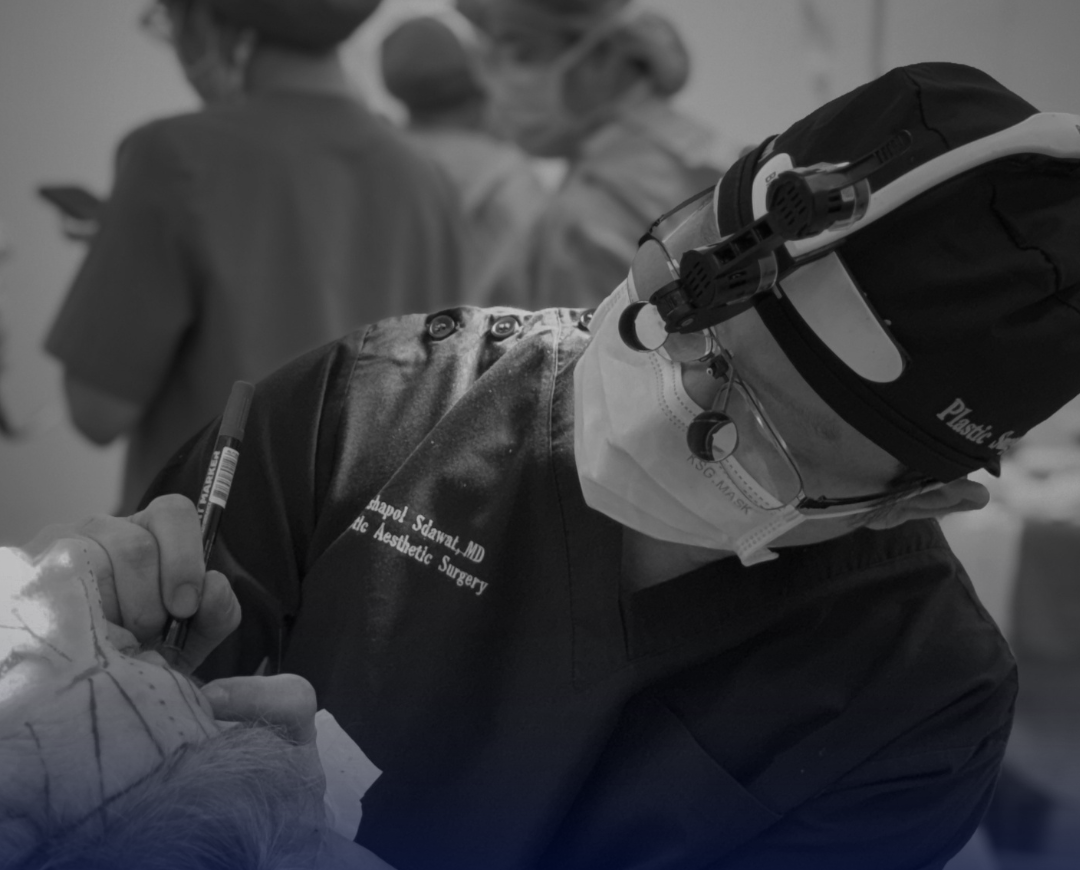
Breast Implant Removal & Exchange in Bangkok
Explant, capsulectomy and implant exchange performed by Dr. Rushapol Sdawat, M.D., Thai board-certified plastic surgeon, at Intrarat Hospital, Bangkok.
Removing or replacing implants — and deciding what to do with the capsule
Your body forms a capsule of scar tissue around every implant. Implant removal (explant) takes the implants out; an exchange replaces them. The capsule may be left, partly removed or completely removed, depending on its condition and the reason for surgery.
Common reasons include capsular contracture (a tight, firm or painful capsule), rupture or leakage, a wish for a different size or no implants at all, implant malposition, symptoms the patient attributes to the implants, and — rarely — implant-associated lymphoma.
Capsulectomy types, defined
Definitions agreed in a 2024 consensus statement by plastic surgery societies and patient advocates.
| Term | What it means | When it is used |
|---|---|---|
| Capsulotomy | The capsule is released with incisions but not removed | To create space or correct position, usually in an exchange |
| Partial capsulectomy | Part of the capsule is removed | When some capsule is firmly stuck to the ribs or chest wall and removal would be unsafe |
| Total capsulectomy | All of the capsule is removed, not necessarily in one piece | Capsular contracture, rupture with silicone in the capsule, or at the patient's request after discussion |
| Total intact capsulectomy | All of the capsule removed in one piece | Where it can be done safely and is clinically appropriate |
| En bloc capsulectomy | Implant and capsule removed together in one piece, with a margin of normal tissue | Suspected or confirmed implant-associated cancer, such as BIA-ALCL |
How tightness around an implant is graded
Baker grade I
The breast is soft and looks natural.
Baker grade II
Slightly firm, but looks normal.
Baker grade III
Firm, and the shape is visibly distorted.
Baker grade IV
Hard, painful and visibly distorted.
Your operation is performed by the surgeon you consult
Dr. Sdawat reviews your previous operation records, implant details and any scans before recommending removal, exchange or removal with a lift, and explains how much capsule he proposes to remove and why.
- ✓Board-certified in plastic surgery since 2000Diploma of the Medical Council of Thailand certifying proficiency in Plastic Surgery, issued 13 July 2000 · licence No. 17689
- ✓The Society of Plastic and Reconstructive Surgeons of ThailandQualified June 2000 · full member since August 2001
- ✓ISAPS member since 2008International Society of Aesthetic Plastic Surgery
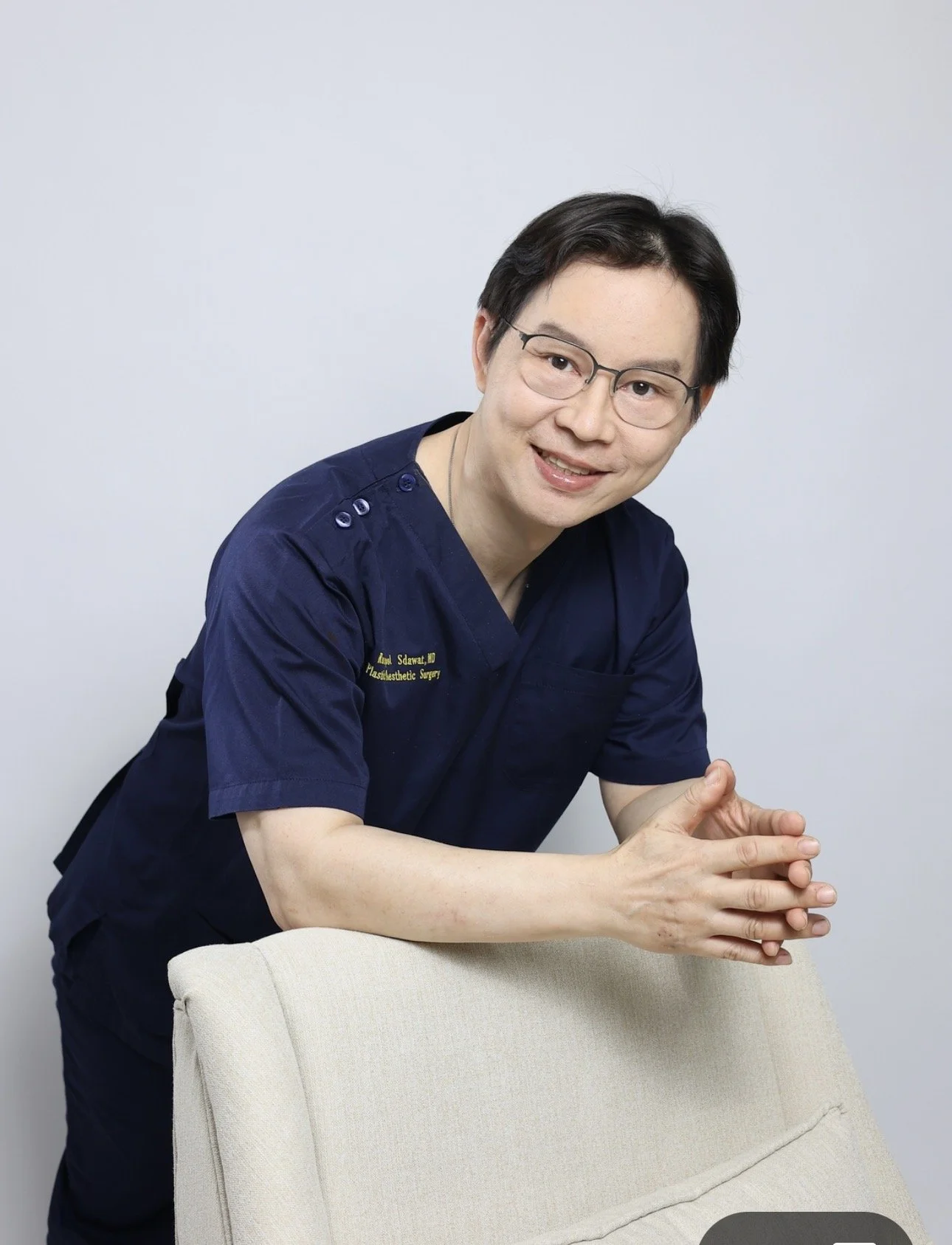 Dr. Rushapol Sdawat, M.D.
Before surgery
Suitability can only be determined by consultation and in-person assessment.
What helps planning
- Records of your original surgery and implant cards, if available
- Recent breast imaging — ultrasound or MRI — where rupture or fluid is suspected
- Any late swelling assessed first, including fluid testing where needed
- No nicotine — or the ability to stop every nicotine product for the period the surgeon requires
- A clear goal: removal alone, removal with a lift, or exchange
Surgery is delayed when
- A new lump or swelling has not been investigated
- You are pregnant or breastfeeding
- Blood pressure or diabetes is uncontrolled, or there is a bleeding disorder or anticoagulant that cannot be safely paused
- Heart, lung or kidney disease makes a general anaesthetic unsafe
How it is performed
Under general anaesthesia, the implant is reached, usually through the previous breast-fold scar. The implant is removed, and the capsule is released, partly removed or removed as planned. In an exchange, the pocket is adjusted and a new implant placed. If a lift is part of the plan, it is completed at the same operation. Drains are commonly used after capsulectomy.
Anaesthesia
General anaesthesia given by a hospital anaesthetist from Intrarat Hospital's anaesthesia department.
Operating time
From about an hour for simple removal to several hours with total capsulectomy and a lift.
Hospital stay
Usually one night; drains are checked before you leave hospital and removed when output falls.
Surgery in a full hospital, not a clinic
Intrarat Hospital, Bangkok: operating theatres, its own anaesthesia department and an intensive care unit, certified ISO 9001:2015.
A hospital anaesthetist gives the general anaesthetic and stays with you throughout the operation. Overnight nursing, and — if it is ever needed — a return to theatre or intensive care, are available in the same building.

What actually happens
Recovery varies with the extent of surgery; this is a general guide only.
Day 0–1 · Hospital
Surgical bra and dressings; drains, if used. Walking the same day.
First week
Soreness and swelling. Drains are removed when the fluid has reduced. No lifting.
Days 10–14 · Review
Wound check and surgeon review before clearance to fly.
Weeks 3–6
Supportive bra for the period advised; exercise resumes in stages.
Months 3–12
The breast shape changes as the skin retracts over several months; a lift may be considered later.
All surgery carries risk. These are the recognised ones.
- Bleeding or haematoma
- Infection
- Seroma — fluid collecting where the implant was
- Loose or deflated-looking breasts after removal
- Asymmetry or contour irregularity
- Change in nipple or breast sensation
- Injury to the chest wall during capsule removal (rare)
- Recurrent capsular contracture after exchange
- Thickened or widened scars
- Blood clots in the legs or lungs
- Risks of general anaesthesia
- The need for further surgery
A written, itemised quotation — not a package price
The cost of implant removal or exchange in Bangkok depends on whether the capsule is removed and how, whether new implants or a lift are added, the length of hospital stay, and the anaesthetic and hospital fees involved. A written, itemised quotation is provided after Dr. Sdawat has reviewed your photographs and history, so that the price reflects the operation you actually need.
The quotation lists the surgeon's fee, anaesthetist, hospital stay, operating theatre, garments and follow-up. Return flights, a companion's travel and travel insurance are separate. Prices are quoted in Thai baht.
From video consultation to clearance to fly
Video consultation
Begins by video with photographs. Dr. Sdawat reviews your history and photographs before any plan is made.
Assessment in Bangkok
In-person examination, blood tests and an anaesthetic assessment before surgery. Surgery is confirmed only after that assessment.
Review before flying
You stay in Bangkok for post-operative reviews and fly only when Dr. Sdawat has cleared you.
Answered plainly
Do I need an en bloc capsulectomy?
A 2024 consensus of plastic surgery societies and patient advocates reserves en bloc capsulectomy — removing implant and capsule in one piece with a margin of tissue — for suspected or confirmed implant-associated cancer. For other reasons, whether the capsule is removed, and how much of it, depends on its condition and what can be done safely. Dr. Sdawat explains his recommendation and records it in your plan.
Will my breasts sag after removal?
Often, yes, particularly after larger implants or many years. The skin may not retract enough, and a breast lift at the same operation or later may be recommended. Your examination determines which.
Will removing my implants resolve my symptoms?
This cannot be promised. Some women report improvement after removal; the evidence is mixed and the cause of symptoms attributed to implants is not understood.
Can my old implants be replaced with new ones?
Yes, in an implant exchange. The capsule may need treatment, the pocket may be changed, and a lift may be added. Your plan states what is proposed.
Can surgery be done if my implants were placed elsewhere?
Yes. Bring every record you have — operation note, implant cards, scans — so that the implant type and position are known before surgery.

Start with an assessment, not a booking
Send your photographs and history for review by Dr. Sdawat. A consultation is an assessment — not a commitment to surgery.
All surgery carries risks. Individual results vary from person to person and are not guaranteed. A consultation and assessment with your surgeon is required before any procedure. This page is general information and does not replace a consultation. Surgery is performed by Dr. Rushapol Sdawat, M.D., Thai Board-Certified Plastic & Reconstructive Surgeon, Medical Council of Thailand licence No. 17689, at Intrarat Hospital, Bangkok.
