
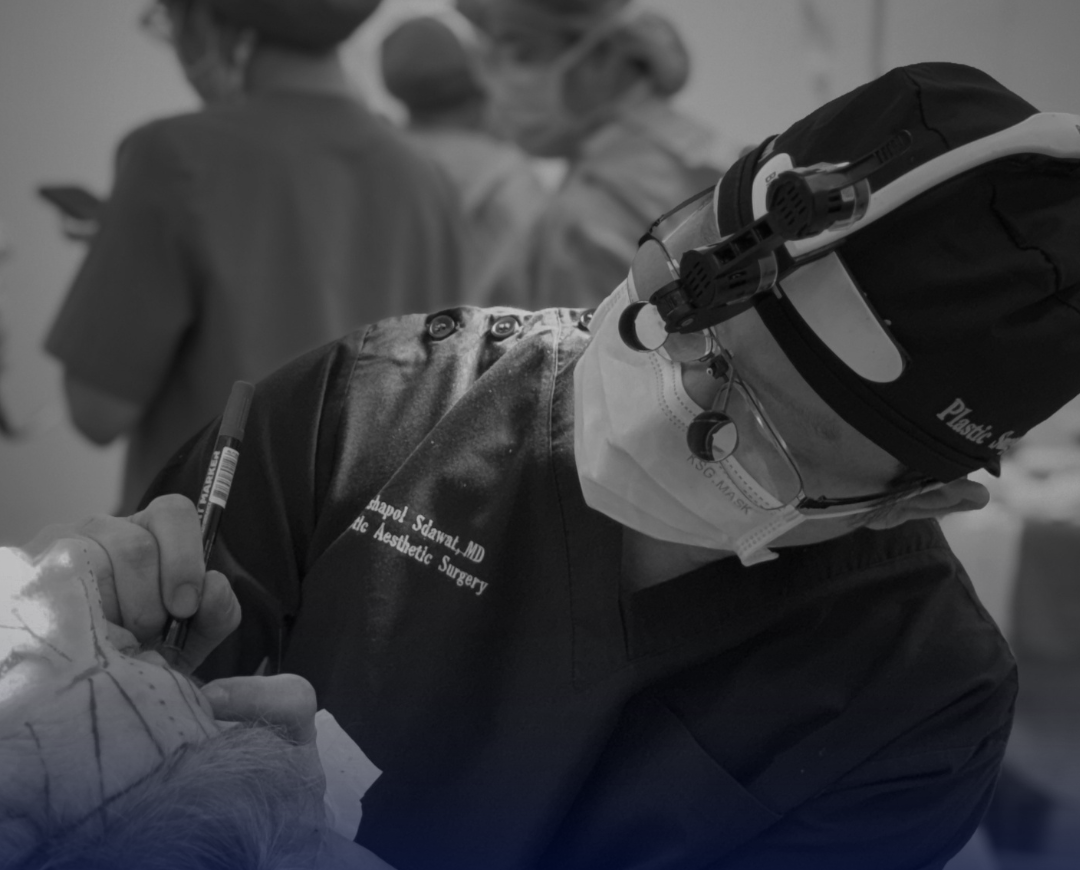
Breast Reduction in Bangkok
Reduction mammaplasty performed by Dr. Rushapol Sdawat, M.D., Thai board-certified plastic surgeon, at Intrarat Hospital, Bangkok.
Removing breast tissue, fat and skin to reduce size and weight
A breast reduction (reduction mammaplasty) removes breast tissue, fat and skin, and raises the nipple and areola, to make the breasts smaller, lighter and higher. Women seek it because of neck, back or shoulder discomfort, bra-strap grooving, rashes under the breast, difficulty exercising, or because their breasts are out of proportion with their frame.
The operation includes a lift, so the scars follow the same patterns as a breast lift. The areola can also be made smaller.
Your operation is performed by the surgeon you consult
Dr. Sdawat chooses the pattern and the pedicle — the tissue that keeps the nipple's blood supply attached — from your breast size, the distance the nipple must move and your skin quality, and explains how the choice affects sensation and breastfeeding.
- ✓Board-certified in plastic surgery since 2000Diploma of the Medical Council of Thailand certifying proficiency in Plastic Surgery, issued 13 July 2000 · licence No. 17689
- ✓The Society of Plastic and Reconstructive Surgeons of ThailandQualified June 2000 · full member since August 2001
- ✓ISAPS member since 2008International Society of Aesthetic Plastic Surgery
 Dr. Rushapol Sdawat, M.D.
Vertical or inverted-T
The final choice is made at examination. These are the usual considerations.
| Pattern | Usually suited to | Scar | Trade-off |
|---|---|---|---|
| Vertical (“short scar”) | Small to moderate reductions | Around the areola and straight down to the fold | Shorter scar; the shape takes several months to settle |
| Inverted-T (“anchor”) | Larger reductions or a large amount of loose skin | Around the areola, down to the fold and along the fold | Removes the most tissue and skin; wound-healing problems are more common where the incisions meet |
| Liposuction only | Selected patients with mostly fatty breasts and good skin | Small entry points | Limited reduction and no lift; not suitable for most |
Who this operation is for — and who it is not for
Suitability can only be determined by consultation and in-person assessment.
A good candidate usually has
- Large breasts causing physical discomfort, skin irritation or difficulty with exercise
- A stable weight, close to your long-term target
- Breast screening up to date for your age, with any lump or abnormal result already investigated
- No nicotine — or the ability to stop every nicotine product for the period the surgeon requires
- Acceptance of permanent scars and possible changes in sensation and breastfeeding
Dr. Sdawat will not operate when
- You are pregnant or breastfeeding, or stopped only recently
- You plan to lose a large amount of weight in the near future
- Nicotine cannot be stopped — cigarettes, vaping, patches or gum reduce blood supply to the skin and nipple and raise the risk of wound breakdown
- Blood pressure or diabetes is uncontrolled, or there is a bleeding disorder or anticoagulant that cannot be safely paused
- Heart, lung or kidney disease makes a general anaesthetic unsafe
How it is performed
The pattern is marked with you standing. Under general anaesthesia, the nipple and areola are kept attached to a pedicle of breast tissue that carries their blood supply. Excess breast tissue, fat and skin are removed, the remaining tissue is shaped, and the nipple is moved to its new position. Removed tissue is sent for routine laboratory examination. Drains are sometimes used.
Anaesthesia
General anaesthesia given by a hospital anaesthetist from Intrarat Hospital's anaesthesia department.
Operating time
Typically two to four hours, depending on the size of the reduction.
Hospital stay
Usually one to two nights in hospital.
Surgery in a full hospital, not a clinic
Intrarat Hospital, Bangkok: operating theatres, its own anaesthesia department and an intensive care unit, certified ISO 9001:2015.
A hospital anaesthetist gives the general anaesthetic and stays with you throughout the operation. Overnight nursing, and — if it is ever needed — a return to theatre or intensive care, are available in the same building.

What actually happens, week by week
Recovery varies between individuals; this is a general guide only.
Days 0–2 · Hospital
Surgical bra on; drains, if used, are checked daily. Walking from the first day.
First week
Swelling and tightness. Sleep on your back, upper body raised. No lifting.
Week 2 · Review
Wound check, especially where incisions meet; surgeon review before clearance to fly.
Weeks 3–6
Supportive bra day and night for the period advised. Desk work after two to three weeks; no heavy lifting for six weeks.
Months 3–12
Shape settles and softens; sensation often improves. Scars fade over 12 to 18 months.
All surgery carries risk. These are the recognised ones.
- Bleeding or haematoma, which may need a return to theatre
- Infection
- Wound breakdown, most often where the incisions meet in an anchor pattern
- Change in nipple or breast sensation, sometimes permanent
- Partial or, rarely, complete loss of the nipple and areola
- Fat necrosis — firm lumps in the breast
- Asymmetry of size, shape or nipple position
- Thickened, widened or raised scars
- Reduced or no ability to breastfeed
- Blood clots in the legs or lungs (DVT or pulmonary embolism)
- Risks of general anaesthesia
- The need for revision surgery
Does a breast reduction last?
The tissue removed does not grow back, but the breasts continue to change with age, pregnancy, hormonal change and weight. Weight gain can enlarge them again, and some descent over time is normal.
A written, itemised quotation — not a package price
The cost of a breast reduction in Bangkok depends on the size of the reduction, the length of hospital stay, and the anaesthetic and hospital fees involved. A written, itemised quotation is provided after Dr. Sdawat has reviewed your photographs and history, so that the price reflects the operation you actually need.
The quotation lists the surgeon's fee, anaesthetist, hospital stay, operating theatre, garments and follow-up. Return flights, a companion's travel and travel insurance are separate. Prices are quoted in Thai baht.
From video consultation to clearance to fly
Video consultation
Begins by video with photographs. Dr. Sdawat reviews your history and photographs before any plan is made.
Assessment in Bangkok
In-person examination, blood tests and an anaesthetic assessment before surgery. Surgery is confirmed only after that assessment.
Review before flying
You stay in Bangkok for post-operative reviews and fly only when Dr. Sdawat has cleared you.
Answered plainly
Can I breastfeed after a breast reduction?
Many women can, particularly when the column of tissue beneath the nipple is preserved, but some cannot, and it cannot be guaranteed. If you plan to breastfeed in future, tell Dr. Sdawat at consultation so the technique can take it into account.
Will I lose nipple sensation?
Nipple sensation can be reduced, increased or, occasionally, permanently lost. Most changes improve over months as nerves recover.
How much smaller can my breasts be made?
That depends on your chest width, the blood supply to the nipple and how much tissue can be safely removed. The planned size is discussed at consultation; it is an estimate, not a cup-size guarantee.
Is a breast reduction covered by Medicare?
Medicare does not cover treatment overseas. If your reduction is for medical reasons, it may be worth discussing the options in Australia with your GP before deciding where to have surgery.
How long do I stay in Bangkok?
Plan for around two weeks: usually one to two nights in hospital, then recovery accommodation nearby with reviews before Dr. Sdawat clears you to fly.

Start with an assessment, not a booking
Send your photographs and history for review by Dr. Sdawat. A consultation is an assessment — not a commitment to surgery.
All surgery carries risks. Individual results vary from person to person and are not guaranteed. A consultation and assessment with your surgeon is required before any procedure. This page is general information and does not replace a consultation. Surgery is performed by Dr. Rushapol Sdawat, M.D., Thai Board-Certified Plastic & Reconstructive Surgeon, Medical Council of Thailand licence No. 17689, at Intrarat Hospital, Bangkok.
