

How Long to Stay in Bangkok After a Facelift — and When It Is Safe to Fly
Patients booking flights usually pick the return date first and ask about the stay afterwards. It is worth doing in the other order, because the stay is built around two fixed points.
The two appointments that set the date
Stitch removal. For facial surgery this generally falls somewhere between day seven and day twelve, depending on the procedures performed and how healing is progressing. It is not a fixed number decided in advance.
The final review and clearance to fly. A short appointment where swelling, wound healing and general recovery are checked before a long flight.
Everything else in the schedule sits around those two.
A typical facial surgery timeline
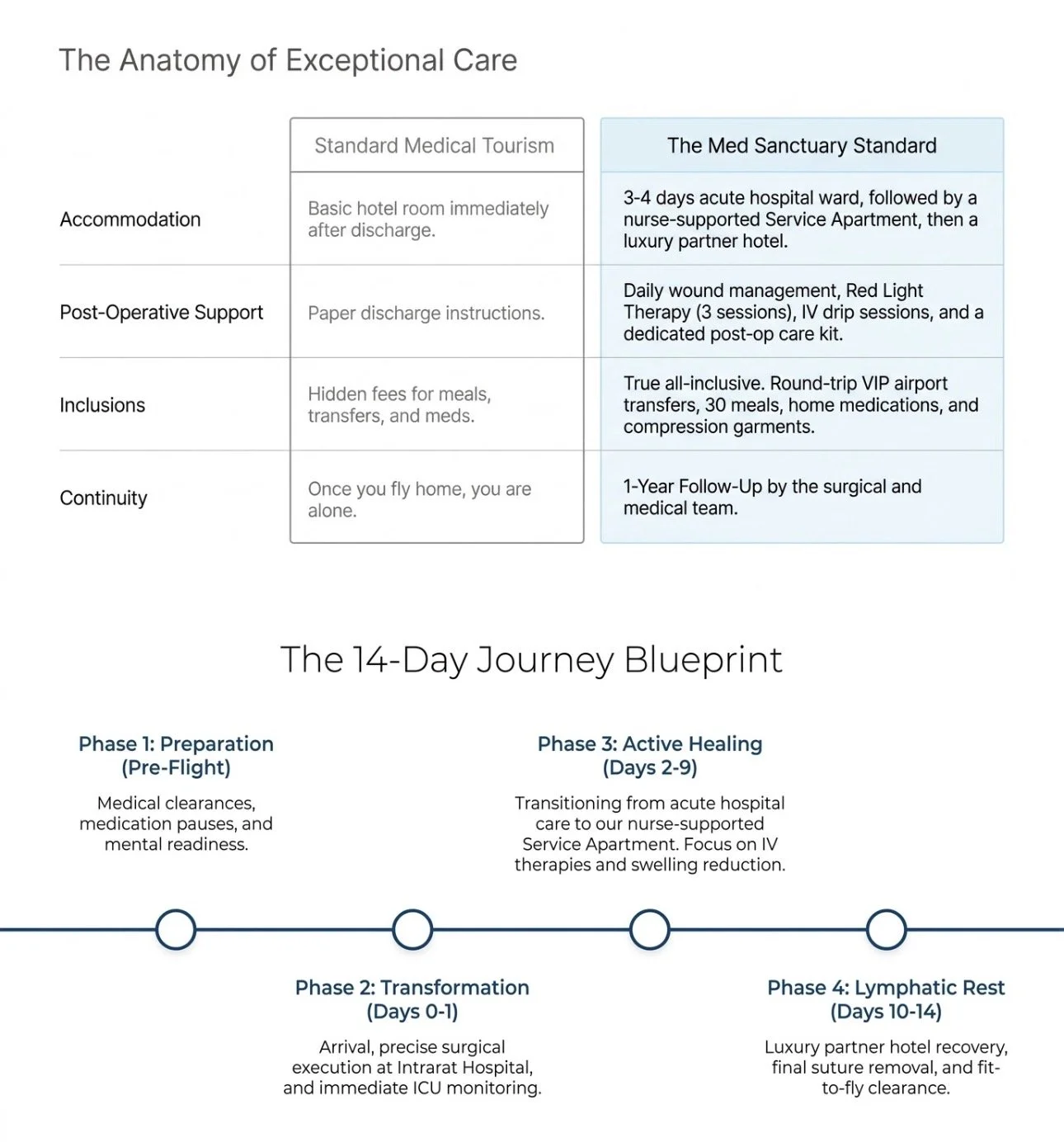
Day of arrival. Rest. Nothing clinical.
Day before surgery. Pre-operative bloods and the anaesthetic assessment. Any medication changes are confirmed here.
Day of surgery. Admission to the hospital ward afterwards rather than discharge the same day.
First few days. Swelling and bruising peak around days two and three. Dressings are checked. Most people feel considerably better once the initial dressings come off.
Middle of the second week. Stitches are removed, usually across more than one visit.
Before departure. The final review and clearance to fly.
Packages arranged through Med Sanctuary are built around this, with a complimentary stay covering the hospital admission and the recovery accommodation, and transport to every post-operative appointment included.
Why flying too early is a genuine problem
The pressure change in a cabin is not the main issue. Three other things are.
Swelling increases on a long flight, particularly in the face, and particularly in the first two weeks.
Blood clot risk is raised after any operation and raised again by a long-haul flight. Combining the two too early stacks two risks that are individually manageable.
Nothing can be treated at 38,000 feet. A wound problem noticed the day before departure can be dealt with. The same problem noticed in the air cannot.
The mistake we see most
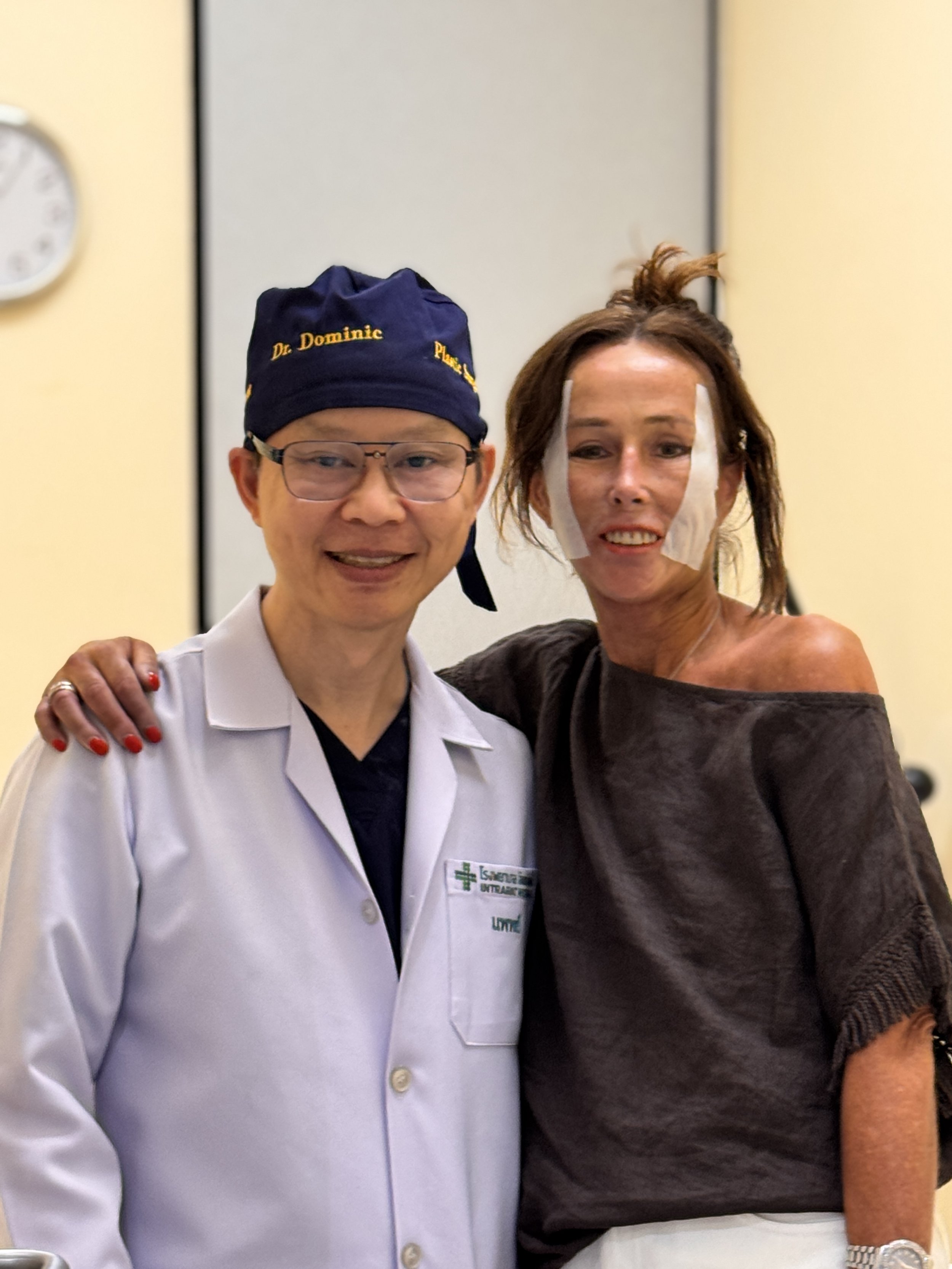
Booking a return flight for the same day as stitch removal.
It appears to work on paper. In practice it means going from the clinic to the airport with no margin, and if the appointment runs late or the surgeon wants another look the following day, there is no way to solve it from Bangkok.
Moving the return flight one day later costs one extra night. We advise it routinely, and where a flight genuinely cannot be moved, stitch removal is brought forward instead so there is a clear day before flying.
Bring somebody, if you can
A companion is not required, but the first two or three days are easier with one. Where a patient is travelling alone, it is worth saying so in advance so that the level of support during that period can be planned.
Frequently Asked Questions
How long do I need to stay in Bangkok after a facelift?
Around two weeks is typical for facial surgery. The stay is built around stitch removal, which generally falls between day seven and day twelve, and a final review before flying. Longer or combined operations may need more time.
When can I fly after a facelift?
After stitch removal and a final review clearing you to travel. Flying earlier increases facial swelling and stacks the clot risk of surgery on top of the clot risk of a long flight.
Can I fly home on the same day my stitches come out?
It is possible but it leaves no margin. If the appointment runs late or the surgeon wants to review you again the next day, there is no way to resolve it. Flying the following day is the safer arrangement.
Does the package include accommodation and transport?
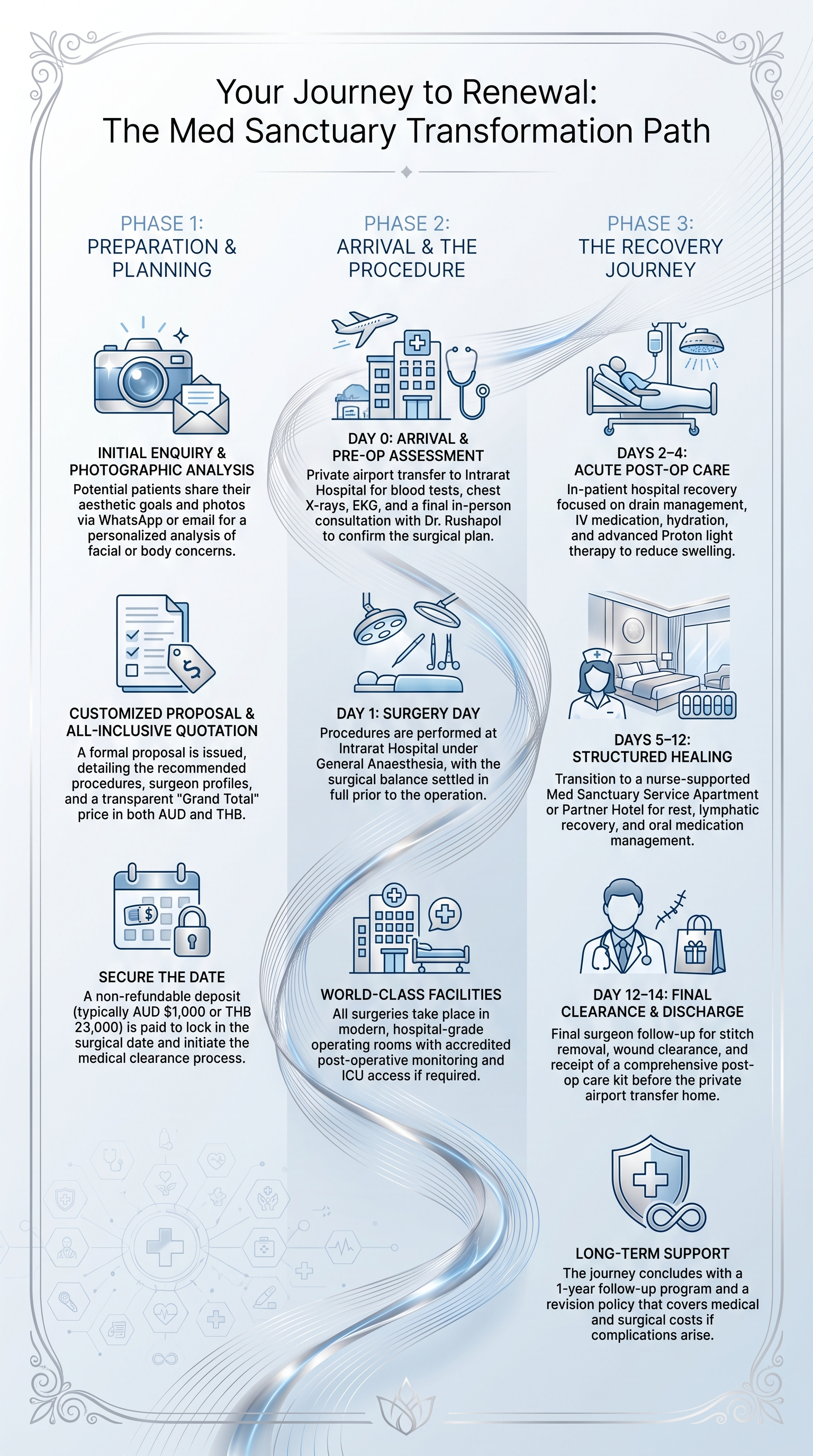
Yes. Packages include the hospital admission and recovery accommodation, meals, airport transfers and transport to every post-operative appointment including stitch removal. Exact inclusions are listed on each individual quotation.
All surgery carries risks. Individual results vary from person to person and are not guaranteed. A consultation and assessment with your surgeon is required before any procedure.

