
How many facelifts can you have? Secondary and revision facelift explained
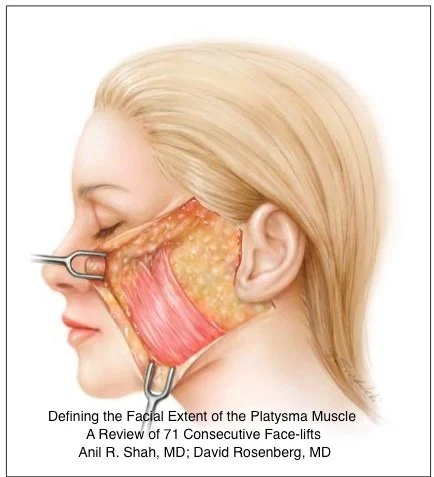
There is no fixed number of facelifts a person can have. In my practice, a revision facelift is a routine part of the work. Most people who have a well-performed facelift in their fifties will, if they live long enough and want to, become candidates for a second facelift ten to fifteen years later. A third operation is less common but not unheard of. The real limits are not a number; they are the condition of your skin, the state of the tissue under it, your general health and, honestly, whether another operation will give you enough benefit to justify it.
The phrase "revision facelift" covers two quite different situations. The first is a secondary facelift: a first operation that worked well, but the face has simply kept ageing and the patient wants to refresh the result. The second is a facelift redo to correct problems from a previous operation, such as a pulled or "wind-swept" look, visible scars, a displaced hairline or an earlobe that has been dragged down. These need very different planning, and I approach them differently.
This article explains how I assess someone asking about a second facelift, what changes inside the face after a first operation, why a revision is technically harder, and the circumstances in which I will advise a patient not to proceed.
How many facelifts can you have? The honest answer
Most patients can safely have two facelifts in a lifetime, and some can have three. I have not seen a sound reason to put a hard ceiling on it, but each operation uses up a little of the skin's capacity to be moved and re-draped. Every facelift removes some skin, and skin does not grow back. If too much is removed over successive procedures, the face begins to look tight rather than young, and the tell-tale signs of "overdone" surgery appear.
What matters more than the count is the interval between operations and the quality of the earlier surgery. A patient whose first facelift lifted the deeper layer (the SMAS, which is the fibrous and muscular sheet under the skin of the cheek) and left the skin itself only lightly trimmed has a great deal in reserve for a secondary facelift. A patient whose first operation was a skin-only lift, pulled tight, has far less.
If you want to understand the difference between these approaches, I have written a separate comparison at facelift techniques compared.
Why a facelift result fades: ageing does not stop
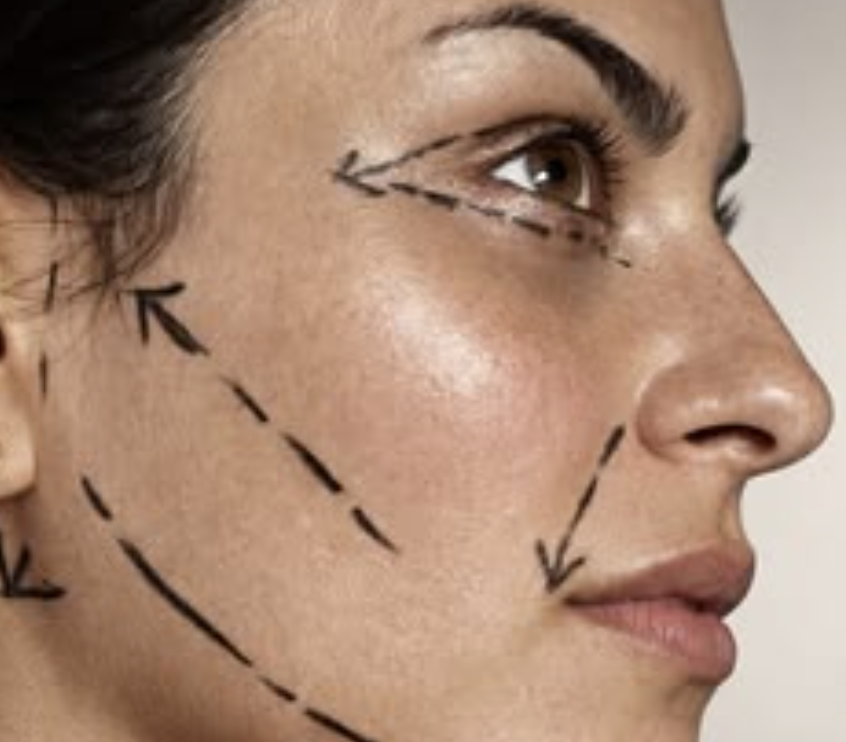
A facelift resets the clock; it does not stop it. After a deep plane facelift, the deeper tissues are repositioned and held, and the result is durable. But ageing continues: the skin keeps losing collagen and elasticity, facial fat shrinks and descends, and the bone of the jaw and cheek slowly loses volume. A patient who looked ten years younger after surgery will, ten years on, look closer to their true age again, though usually still better than if they had never had surgery.
That gradual return of laxity is the most common and most legitimate reason someone asks me about a second facelift. I discuss durability in how long does a deep plane facelift last.
Secondary facelift vs facelift redo: two different operations
I find it helps patients to separate these clearly.
Secondary faceliftFacelift redo (corrective revision)ReasonNatural ageing after a good first resultProblems caused by the first operationTypical timing8–15 years after the firstUsually 12 months or more after the first, once tissues have settledMain goalRefresh lift, address new jowls and neck laxityCorrect distortion, scars, hairline or earlobe problems, restore a natural lookDifficultyModerate; scar tissue presentOften high; tissues may be thinned, scarred or over-resectedSkin removalSmall amountOften none; sometimes tissue must be added back
A secondary facelift is a familiar operation performed in a slightly more difficult field. A corrective facelift redo is closer to reconstructive surgery: releasing tissue pulled in the wrong direction, repositioning the deeper layer properly, and sometimes adding the patient's own fat where earlier surgery has left the face hollow.
What has changed under the skin after a first facelift
When I operate on a face that has been lifted before, several things are different.
Scar tissue and altered planes
Scar tissue forms wherever the previous surgeon dissected. The natural layers I normally separate easily are stuck together, and I must work more slowly to find them. The facial nerve branches, which control the muscles of expression, can be pulled out of their usual position by scarring. This is why a revision facelift carries a slightly higher risk of temporary nerve weakness than a first operation, and why I am cautious about who I accept.
Thinner skin and less to work with
Skin that has been undermined (lifted from the tissue beneath it) and re-draped once has lost some blood supply and thickness. I must be careful not to remove too much and not to place tension on it.
Previous incisions and hairline
If the first surgeon's incision has let the sideburn drift upwards, I cannot lift the cheek without displacing it further unless I adjust the plan. Similarly, the "pixie ear" deformity, where the earlobe has been pulled down and forward, must be released and corrected as part of the revision.
Who is a good candidate for a revision facelift
When I assess a patient for a second facelift, I am looking for a specific combination of things.
A clear, realistic problem. Recurrent jowls, a loosened neck, or new deep folds beside the nose are good reasons. "I want to look like I did the week after my first surgery" is not.
Enough healthy tissue. I examine the skin thickness and mobility, and feel for the deeper layer. If the SMAS was not addressed in the first operation, there is usually plenty to lift.
Good general health. A revision takes longer and is more demanding on the body than a first facelift. Blood pressure, diabetes, smoking status and medications all matter. I cover this in your medications and cosmetic surgery.
Time since the last operation. I prefer at least twelve months, and ideally longer, for tissues to soften and swelling to fully resolve before any corrective revision. For a secondary facelift after natural ageing, the interval is usually much longer anyway.
Realistic expectations about scars. Existing scars can often be improved, but they are never erased.
When I advise against a second facelift
The house style of my practice is to tell patients when not to operate, and revision surgery is where this matters most.
I will decline or delay a revision facelift when the skin is already too tight. If I can see the signs of an over-pulled face, particularly a flattened cheek, a mouth that has been drawn sideways, or a change in the shape of the eye, the answer is almost never "more lifting". These faces usually need volume put back, sometimes a release of the earlier tension, and very often nothing more.
I also decline when the main concern is something a facelift does not treat. Fine wrinkling, sun damage and pigment changes are skin-surface problems better managed with skin treatment. Volume loss in the temples, cheeks and around the mouth may be better treated with fat grafting alone.
And I decline when the expected benefit is small. If a patient in their late seventies has modest laxity, I must weigh a real operation with real recovery against a subtle gain. Sometimes a smaller procedure, such as an isolated neck lift, is wiser.
What a secondary facelift involves in my practice
For most patients seeking a second facelift, I perform a deep plane technique, releasing and repositioning the deeper layer of the face and neck rather than pulling on skin. The scars are placed within or along the previous scars wherever possible, so that the patient does not end up with two sets. If the earlier scars are poor, I remove them and close the new incision carefully.
Where the neck has loosened, I often add platysmaplasty (tightening of the thin neck muscle called the platysma) through a small incision under the chin. Where the face has hollowed, I may add fat grafting to the cheeks and temples in the same operation.
Recovery is broadly similar to a first facelift, though swelling can last a little longer because of the scar tissue. The general pattern is in my facelift recovery timeline. International patients need the same stay in Bangkok as for a first facelift.
Revision facelift after surgery elsewhere
Many patients who ask me about a facelift redo had their first operation with another surgeon, in Australia, Thailand or elsewhere. Even well-performed facelifts can have unsatisfying outcomes, and corrective revision is a legitimate part of plastic surgery.
What I need is information. Operative notes from the first surgeon tell me which layers were dissected and what was removed. Photographs from before the first operation show me what the face looked like originally. If you cannot obtain these, I can still assess you, but I will plan more conservatively.
For Australians, since 1 July 2023 you need a GP referral before a cosmetic surgery consultation, and Medicare does not cover purely cosmetic surgery. Australian travel insurance generally excludes elective cosmetic surgery abroad and its complications, so plan revision surgery overseas with that in mind.
Frequently asked questions
How long should I wait between a first and second facelift?
For a secondary facelift after natural ageing, most patients wait eight to fifteen years, and the right moment is when the laxity genuinely bothers them again. For a corrective revision, I prefer to wait at least twelve months after the first operation so that swelling has fully settled and scar tissue has softened.
Is a revision facelift riskier than a first facelift?
It is somewhat more demanding. Scar tissue makes the dissection slower and the facial nerve branches can sit in unexpected places, so the risk of temporary weakness is a little higher. In experienced hands the overall risk remains low, but I am more selective about who I accept.
Can a revision facelift fix a pulled or wind-swept look?
Often it can improve it considerably. The usual approach is to release the tissues that were pulled in the wrong direction, reposition the deeper layer along a more natural vector, and restore lost volume with fat grafting. It cannot, however, return skin that was removed.
Will I have new scars after a second facelift?
I place incisions in or alongside the existing scars wherever possible, so most patients end up with a single, often improved, scar line rather than two. Where the old scars are wide or badly positioned, they are removed as part of the revision.
How many facelifts can you have in total?
Two is common and three is possible for some patients. Beyond that the skin has usually been re-draped too many times to give a natural result. The real answer depends on your tissue, not on a number.
Do I need a full facelift, or could a smaller procedure be enough?
Sometimes a neck lift alone, or fat grafting alone, is the better choice. This is exactly what a proper assessment is for, and I will tell you honestly if I think a full revision facelift is more than you need.
This article is general information, not medical advice. Every face and every previous operation is different, and nothing here replaces an individual assessment. If you are considering a revision facelift or a second facelift, you are welcome to book a video consultation with me to discuss your situation.
